 US Dollar
 Australian Dollar
 Euro
Euro
 Canadian Dollar
 British Pound Sterling

If you are into rocks and minerals, then you know there are a few types of rocks that are prolific on the market from a specific country, so that when you see them-like Malachite (Africa) or Labradorite (Madagascar)-you automatically assume where it’s from. But it might surprise you to learn that most rocks are found in other countries. Very few types of rocks are found in just one location in the world (Blue Lace Agate is one them!). Sometimes that same rock might be called a different name if it is found in a different location-like Labradorite is called Spectrolite when found in Finland. Sometimes, as in the previous example, you can tell which location that rock came from simply by looking at it, and sometimes you can’t.
So, I thought it might be fun to explore these rocks and minerals and see which ones you can find in the United States! The listings may not be exhaustive-I’ve included sites I personally have heard of or know of and areas included on reputable sites.
We will start with the examples mentioned above:
Labradorite- Labradorite is named after where it was first found in 1770; Labrador, Canada, however almost all of the Labradorite on the market today is from Madagascar. As mentioned above, Labradorite with superb labradorescence comes from Finland, but it was given the name Spectrolite by the director of the Geological Survey of Finland.
In the U.S. Labradorite has been found in Alabama, Arizona, California, Colorado, Connecticut, Geogia, Hawaii, Idaho, Maine, Massachusetts, Michigan, Minnesota, Missouri, Montana, Nebraska, Nevada, New Hampshire, New York, North Carolina, Ohi, Oregon, Pennsylvania, Rhode Island, South Carolina, South Dakota, Tennessee, Texas, Utah, Vermo, Virginia, Washington, AND Wyoming.
Moonstone- Moonstone is actually a Feldspar like Labradorite, but it is a trade name given because it is primarily white with rainbow opalescence. Moonstone is most commonly found in India. But it has been found in Alabama, California, Colorado, Connecticut, Georgia, Indiana, Nebraska, New Mexico, North Carolina, Pennsylvania, Rhode Island, Tennessee, Virginia, Wisconsin AND Wyoming.
Malachite- African Malachite is plentiful and has a very distinctive look. But there is lots of Malachite in the United States. Especially in the southwest around the major copper mines. The Copper Queen Mine in Bisbee, Arizona is quite famous for its Malachite and some lovely, solid Malachite pieces came from the Bagdad Copper Mine. Almost any copper mine will produce Malachite, but much of the Malachite in Arizona is mixed with other copper ores; chrysocolla, azurite, etc. Malachite has also been found in New Mexico, Utah, North Carolina, New Hampshire, and Michigan.
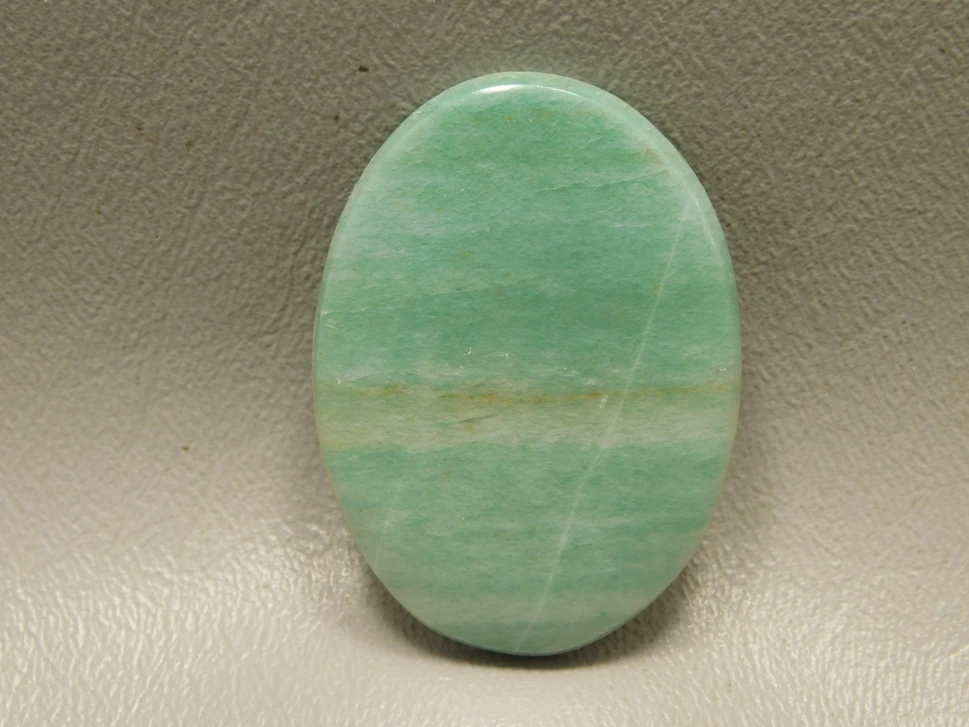
Aventurine- Most of the Aventurine on the market today comes from India. However, in the U.S. it can be found in Utah, Arkansas, Nebraska, Vermont, Virginia, and Wisconsin.
Sodalite- This beautiful blue stone is found in many countries. The majority of good Sodalite on the market comes from Brazil, with some beautiful material more recently coming out of Namibia. Sodalite is found in the Unted States in Arkansas, Colorado, California, Connecticut, Maine, Massachusetts, Hawaii, Kansas, Michigan, Minnesota, Montana, New Hampshire, New Jersey, New Mexico, New York, South Dakota, Texas, Utah, Vermont AND Wisconsin! Whew!
Lapis Lazuli- Everyone knows that the majority f Lapis comes from Afghanistan. But did you know it was also found in Colorado and California?
Unakite- Unakite is commonly found in South Africa. But it was actually named for where it was first discovered in America, in the Unakas mountains of North Carolina. It has also been found in Virgina.
Tiger Eye- Tiger eye is primarily found in South Africa, with some beautiful stuff also coming from Australia. I have heard that Tiger Eye can be found in a few states, including Montana and Arizona, but I have never seen it. I do know that what is marketed as Arizona Tiger Eye or California Tiger Eye is actually a Serpentine and Chrysotile mixture that is so named because of its chatoyant flash, but is not the same mineral at all!
As I was researching for these “Found in The United States” blogs, (click the U"S Gemstones tag to se them all!), even I was surprised to find out how rich our country is in natural rock and mineral resources! So, why aren’t there more U.S. rocks on the market? Well, that’s a subject for my last blog in the series-checkback next month for my final summary blog “Gemstone Production in the U.S.”.
Happy hunting!