 US Dollar
 Australian Dollar
 Euro
 Canadian Dollar
 British Pound Sterling

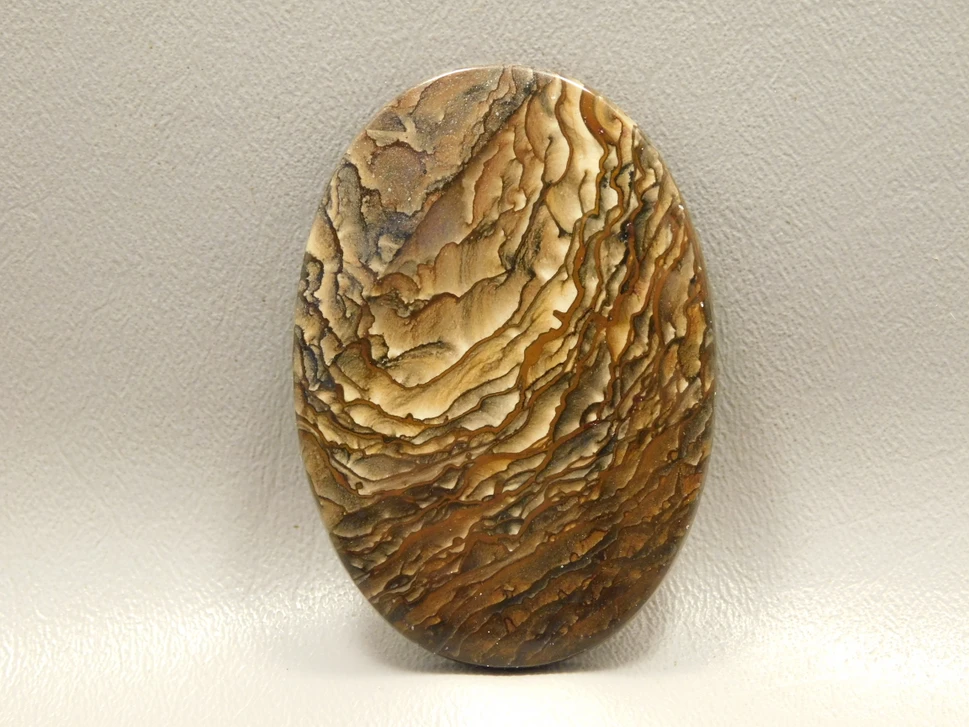
Okay, it’s time to wrap up my series on rocks and minerals found right here in the United States.
You can check out the previous blogs in this series by clicking on the ”#U.S. Gemstones” tag at the bottom of this page or clicking on the link in your upper right to see all my blogs!
As I was researching for these “Found in The United States” blogs, even I was surprised to find out how rich our country is in natural rock and mineral resources!
The U.S. Geological Survey, or USGS, monitors all mining within the U.S. They published this paper in 2025:
https://pubs.usgs.gov/periodicals/mcs2025/mcs2025-gemstones.pdf
On it they stated the following:
“The combined value of U.S. natural and synthetic gemstone output in 2024 was an estimated $73 million, an 8% decrease compared with that in 2023. Domestic natural gemstone production included agate, beryl, coral, diamond, garnet, jade, jasper, opal, pearl, quartz, sapphire, shell, topaz, tourmaline, turquoise, and many other gem materials. In descending order of production value, Arizona led the Nation in natural gemstone production, followed by Oregon, Nevada, California, Montana, and Maine. These six States accounted for 71% of the natural gemstone production in the United States.”
Currently there are about 134,153 USGS records of mines in The United States.
The BLM has close to 4 million claims but only about 400,000 are active mining claims and there are about 380 pending claims. These claims are for all mining including gold, silver, copper, others metals, as well as other rocks and minerals. Mining claims can be for large scale copper mines with heavy equipment to just one person out hand digging rocks. Some areas are never claimed, but rocks are still collected there by “rockhounds”. There also are quite a lot of pay-to-dig areas.
Despite this, gemstone production in the United States is surprisingly low considering the large geographic area of the country and the many rocks and minerals found here.
So, as I asked last month, why aren’t there more U.S. rocks and minerals on the market?
Three barriers stand between an interest in mining and the successful operation of a mine:
1) the cost of opening a mine- The cost of opening a mine in the United States is astronomical. Before mining can begin, a permit must be obtained from the government, usually the BLM (Bureau of Land Management). The permit is required to assure that the mine will be developed and operated with minimal impact on the environment, minimal hazard to employees, and in compliance with all local, state and federal laws. This is not usually expensive, but the time investment in research, data collection, planning, and writing that must be done to complete a permit application is enormous. Once you get permission the cost of actual mining is expensive. Equipment, fuel for said equipment, temporary housing concerns, and transportation. These costs are rarely supported by the small-size deposits that are typical of most gemstone mining. And of course, mining is a treasure hunt-there are no guarantees that you will even find much, or any, of what you are looking for!
2) Then there is the cost of American labor, which is much higher than most other countries. For a large-scale operation you will need skilled labor, MSHA trained, equipment operators, etc. And if the area is remote, you have to figure out how to house, feed, etc. everybody during the operation.
3) And the third problem is the government regulations related to environment and labor. Obviously, it is very important to protect the environment and the people working for you. But there are also many costs associated with operating a mine in compliance with government regulations. A significant investment must be made in safety planning, equipment, and procedures. Another significant investment must be made to control wastewater, erosion, dust, storage and many other problems associated with operating a mine. These can easily total more than the value of the gemstones that would be produced from a small gemstone deposit.
Fortunately, the BLM still allows rockhounding or some collecting on their land. Check out their site for regulations. And rocks and minerals can still be collected on private land, with permission from the owner.
Check out my series of rockhounding blogs on our sister website.
Check the rules, follow the maps, use common sense-and Happy Hunting!